
The Program’s Place in Corporate Recognition
Employee recognition programs operate most effectively when they are consistent, specific, and connected to the work they are recognizing. Programs that rely on a single annual gesture – a year-end gift or a bonus – miss most of the moments when recognition would have the highest impact. Teams that receive recognition at quarter close, project completion, and service milestones in addition to the holiday season develop a culture of acknowledged contribution that infrequent gifting cannot create.
Premium chocolate gifts occupy a specific position in the corporate recognition toolkit: they are appropriate across a wide range of occasions and budget levels, received positively by most recipients, and available in formats that scale from small team deliveries to company-wide programs. The execution – quality of the product, presentation, and the communication that accompanies it – determines whether the gift registers as genuine recognition or as a programmatic gesture.
The corporate gifting program relationship matters beyond any individual order. A vendor with consistent product quality, reliable fulfillment, and flexible ordering processes reduces the administrative friction of running a recognition program to the point where it can be executed at the moments that matter rather than only when someone has the bandwidth to manage a complex order.
What the Program Provides
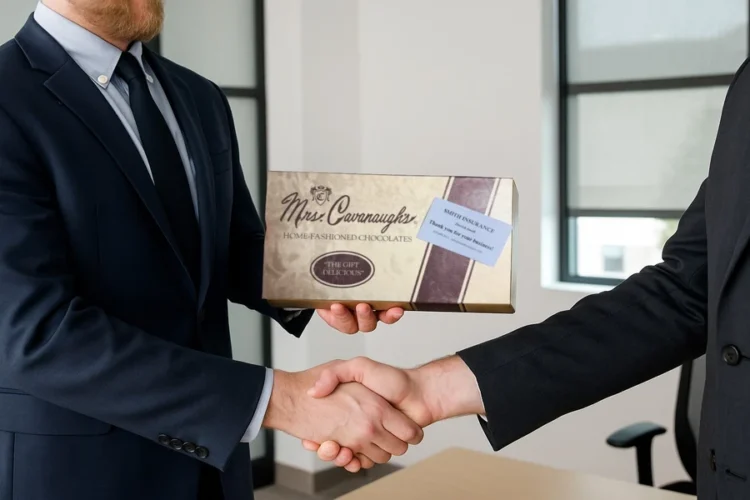
The Mrs. Cavanaugh’s corporate gifting program is structured around the practical requirements of team-scale recognition: volume pricing that makes broad deployment economically sensible, consistent product quality across orders, and ordering processes that accommodate both planned program gifting and spontaneous recognition moments when a team accomplishes something worth acknowledging immediately.
Product quality consistency matters specifically in a corporate context because the experience of receiving the gift is compared across the team. A program where some employees receive a well-packaged, fresh product and others receive something that arrived in poor condition undermines the recognition intent – the inequity in the experience becomes part of what is discussed rather than the appreciation.
SHRM guidance on employee recognition programs emphasizes that the mechanism of recognition matters alongside its frequency. A gift that arrives with specific acknowledgment of what is being recognized lands differently than the same gift delivered with generic appreciation language. The program works best when it enables specific communication rather than replacing it.
Planning Frequency and Budget
Organizations that integrate food gifting into their recognition calendar at multiple points throughout the year – rather than concentrating it in a single holiday window – build recognition cultures that feel ongoing rather than obligatory. End of quarter, project completion, team anniversaries, and unexpected wins are natural moments that become more meaningful when the organization has established the practice of acknowledging them.
Budget planning for a corporate gifting program benefits from treating it as a recurring operational expense rather than a discretionary one. Organizations that budget for recognition as a line item – rather than funding it from whatever is left over – are more consistent in executing it at the moments that matter. The investment in consistent recognition produces returns in engagement and retention that most organizations track separately from the gifting budget.
Establishing a point of contact within the organization for program management – someone who maintains the vendor relationship, coordinates order timing, and ensures the communication accompanying gifts is specific rather than generic – produces more consistent program execution than leaving it to whoever has time when the gifting moment arrives.